
Blog ·
Why "Fragrance-Free" Shampoos Still Cause Scalp Psoriasis Flare-Ups
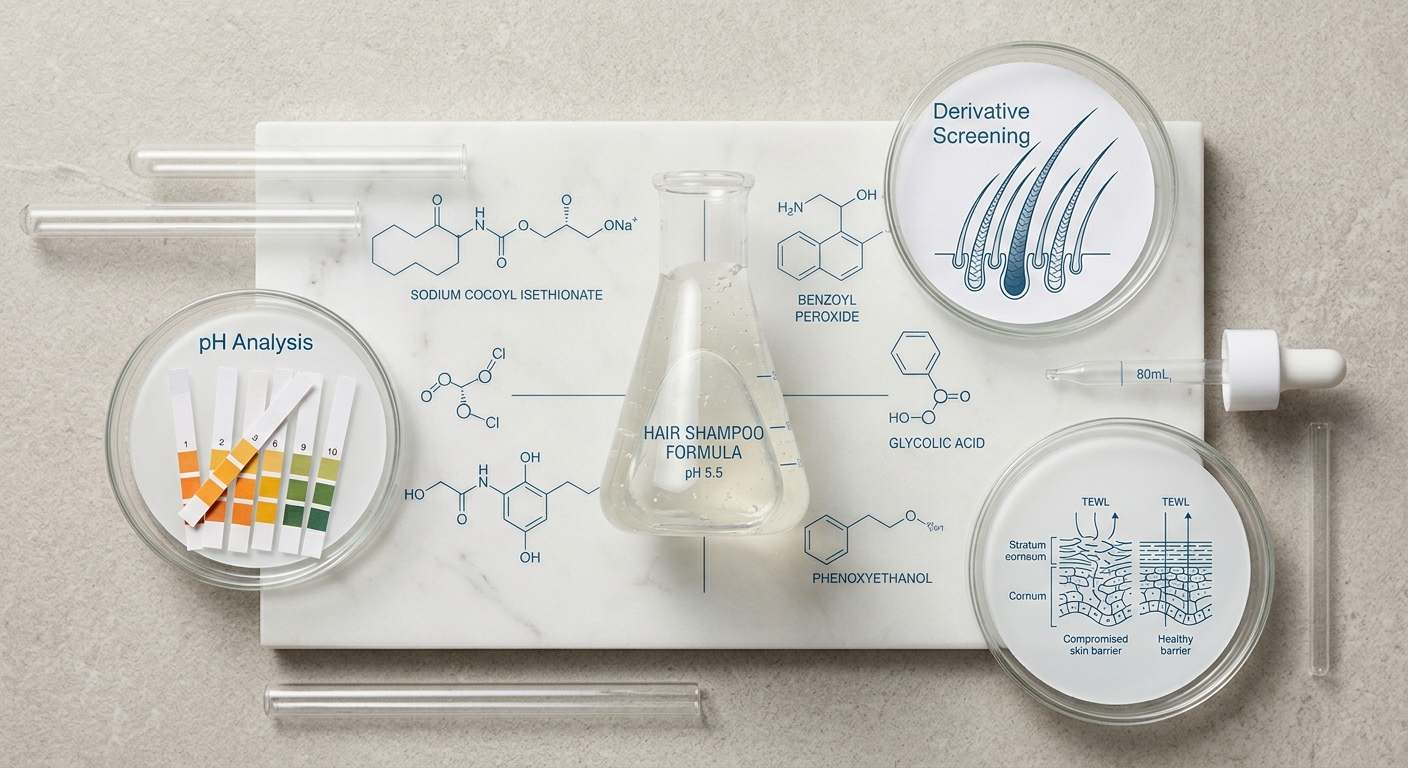
Scalp psoriasis is one of the most persistent, uncomfortable skin conditions to manage. Characterized by rapid skin cell turnover, thick silver scales, intense itching, and localized inflammation, a sensitive scalp requires extreme care when selecting personal care products.
When searching for safe hair care, most people prioritize one specific label claim: "Fragrance-Free."
It makes intuitive sense. Synthetic fragrances are well-documented triggers for contact dermatitis and skin irritation. Removing added perfume feels like a guaranteed way to prevent a flare-up.
Yet, many individuals switch to a fragrance-free shampoo only to experience burning, itching, or increased scaling within days.
The issue isn't that fragrance is safe—it's that removing fragrance only solves one piece of a complex chemical puzzle. Here is a science-backed look at why fragrance-free shampoos can still trigger scalp psoriasis flare-ups, and how to evaluate hair care formulas for true scalp compatibility.
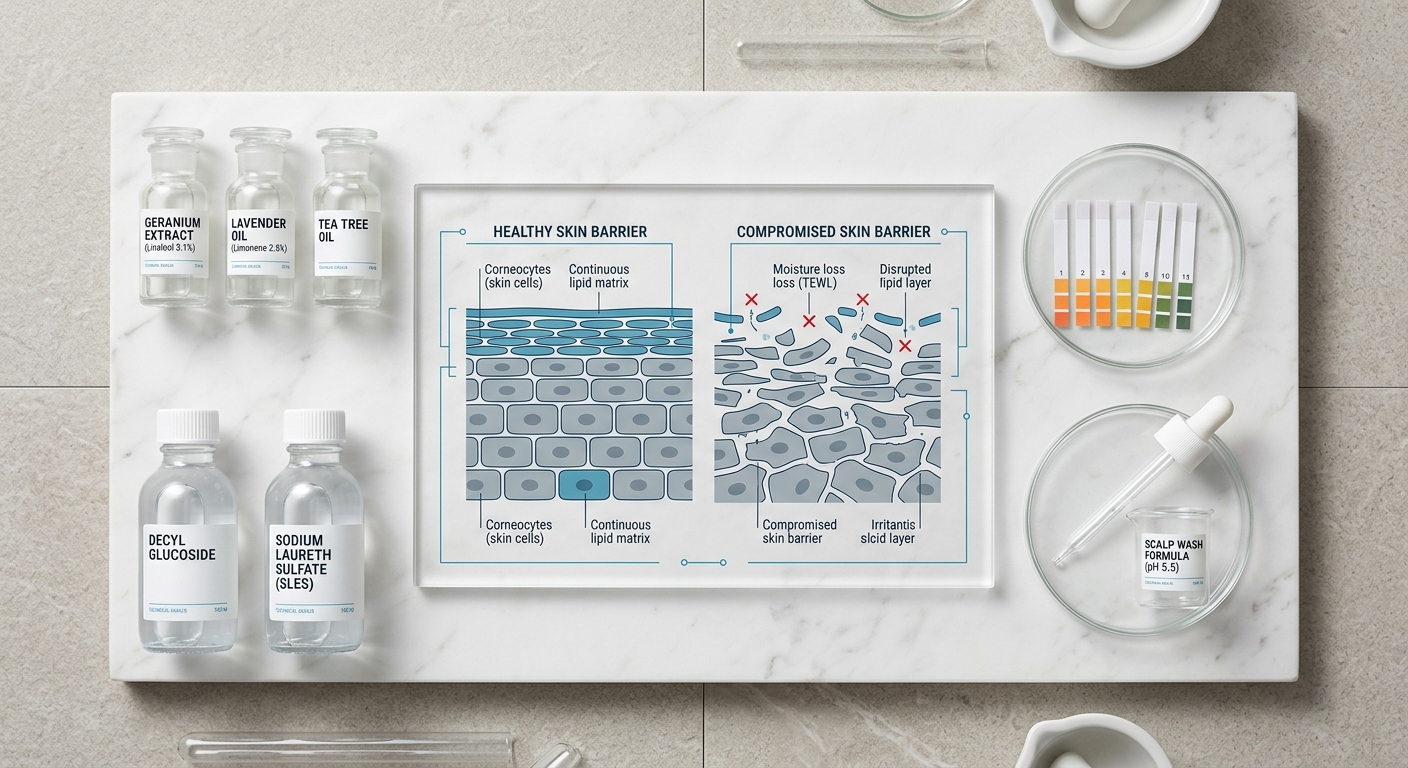
1. Harsh Surfactants and Moisture Barrier Depletion
Fragrance-free does not mean sulfate-free or mild. The primary job of any shampoo is to cleanse the scalp by using surfactants—compounds that break down oil, dirt, and product buildup so they can be rinsed away with water.
However, strong primary surfactants can strip the scalp's delicate stratum corneum of essential lipid oils (ceramides, cholesterol, and fatty acids).
The Mechanism: Scalp psoriasis is inherently linked to a compromised skin barrier. When harsh cleansing agents strip natural oils, Transepidermal Water Loss (TEWL) spikes rapidly.
The Result: The immune system responds to extreme dry barrier conditions by accelerating inflammation, causing the scalp to produce new skin cells even faster. This accelerates scale formation and triggers an intense itch-scratch cycle.
Common strong surfactants that can disrupt a sensitive scalp—even in fragrance-free formulas—include Sodium Lauryl Sulfate (SLS) and Sodium Laureth Sulfate (SLES).
2. Unmasking Essential Oils and "Natural" Extracts
Under cosmetics labeling regulations, a product labeled "Fragrance-Free" or "Unscented" cannot contain added synthetic fragrance oils used strictly for perfume purposes.
However, many manufacturers substitute synthetic fragrance with botanical extracts, essential oils, or floral hydrosols to market the product as "clean" or "naturally soothing."
The Research: Clinical data published by the American Contact Dermatitis Society (ACDS) routinely ranks essential oils—such as Tea Tree Oil, Lavender, Peppermint, and Ylang-Ylang—among top contact allergens.
The Chemical Reality: Essential oils are complex mixtures containing naturally occurring aromatic compounds like Linalool, Limonene, and Geraniol. When exposed to air, these compounds oxidize into potent sensitizers that can easily trigger delayed-type hypersensitivity on an already inflamed psoriasis plaque.
3. The Preservation Problem: Isothiazolinones and Organic Acids
Every water-based shampoo requires a preservative system to prevent dangerous bacterial, yeast, and mold growth. While necessary for product safety, certain preservative systems are known irritants for compromised skin.
Isothiazolinones: Preservatives such as Methylisothiazolinone (MI) and Methylchloroisothiazolinone (MCI) have exceptionally high rates of contact sensitization. Even in rinse-off fragrance-free formulas, they can cause burning and contact allergy flare-ups on psoriasis-prone scalps.
Low-pH Organic Acids: Some fragrance-free eco-certified shampoos use organic acids like Benzoic Acid or Sorbic Acid as natural preservatives. While safer for the environment, these acids require a low formulation pH to work, which can cause intense stinging on open psoriasis lesions or cracked scalp skin.
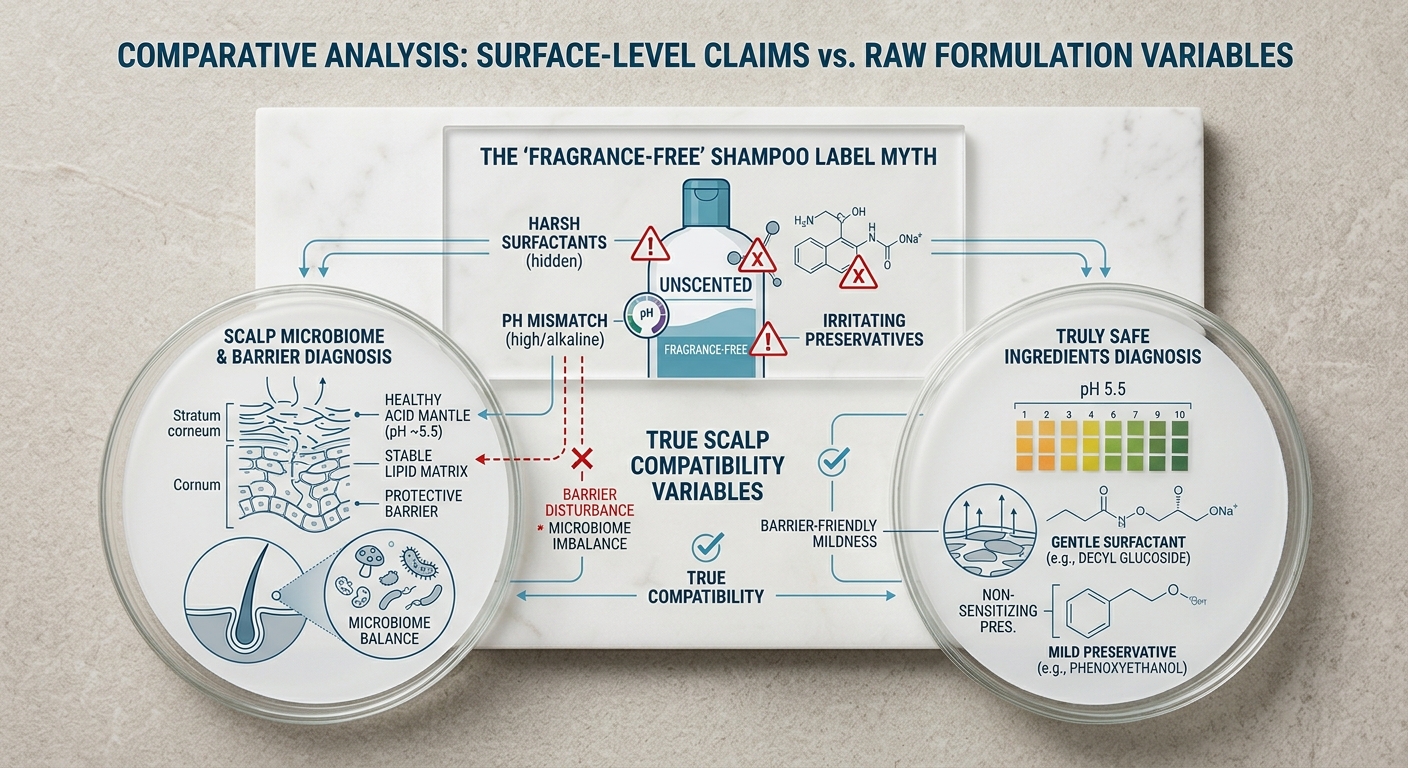
4. pH Mismatch with Scalp Physiology
The natural pH of a healthy scalp resides around 4.5 to 5.5—slightly acidic to keep the microbiome balanced and the skin barrier sealed.
Many fragrance-free bar shampoos, soap-based cleansers, or high-foaming formulas have an alkaline pH (7.0 or higher).
Applying an alkaline formula to a psoriasis-prone scalp alters the skin's acid mantle. An elevated pH degrades barrier enzymes, increases scalp vulnerability to microbial imbalance, and leads to immediate tightness, scaling, and irritation after washing.
How to Choose a Truly Safe Shampoo for Scalp Psoriasis
Instead of relying on front-of-bottle claims, evaluate your hair care based on full formulation compatibility:
1. Look for Mild, Non-Ionic or Amphoteric Surfactants
Choose shampoos that use gentle cleansing agents like Decyl Glucoside, Lauryl Glucoside, Cocamidopropyl Betaine, or Sodium Cocoyl Isethionate. These clean the scalp without stripping structural lipids.
2. Check for Hidden Botanicals
Scan the ingredient list (INCI) for any ingredient ending in Oil, Extract, or Water. If your scalp is actively inflamed, avoid products containing aromatic botanicals like peppermint, eucalyptus, tea tree, or citrus oils.
3. Seek Barrier-Supporting Ingredients
Look for formulas containing soothing, barrier-supportive ingredients such as Colloidal Oatmeal, Allantoin, Bisabolol, Ceramides, or Panthenol (Pro-Vitamin B5) to calm itching while washing.
4. Verify the Preservative Profile
Opt for products preserved with milder systems, such as Phenoxyethanol, Ethylhexylglycerin, or Sodium Benzoate, while avoiding Methylisothiazolinone (MI).
How DermicIQ Takes the Risk Out of Scalp Care
Reading complex chemical lists while managing an active scalp psoriasis flare-up can feel overwhelming.
DermicIQ simplifies product selection by analyzing raw formulation chemistry directly against your personal scalp sensitivity profile:
Derivative and Botanical Tracing: Identifies hidden aromatic compounds, essential oil derivatives, and natural extracts masked under botanical Latin names.
Surfactant and Preservative Screening: Flags harsh sulfates, high-sensitization preservatives, and potential pH irritants before they touch your scalp.
Unbiased Analysis: DermicIQ operates completely free of beauty brand sponsorships, affiliate commissions, or paid "clean" badges, giving you objective safety assessments.
Managing scalp psoriasis requires looking past marketing labels to understand raw formula compatibility. By focusing on gentle surfactants, safe preservatives, and zero-irritant formulas, you can maintain a clean, healthy scalp without triggering unnecessary flare-ups.
👉 [Download DermicIQ for Free]
Scan your current shampoo or conditioner in seconds to check for hidden scalp irritants.