
Blog ·
The Science of Skincare Layering: Which Ingredients Should You Avoid Mixing?
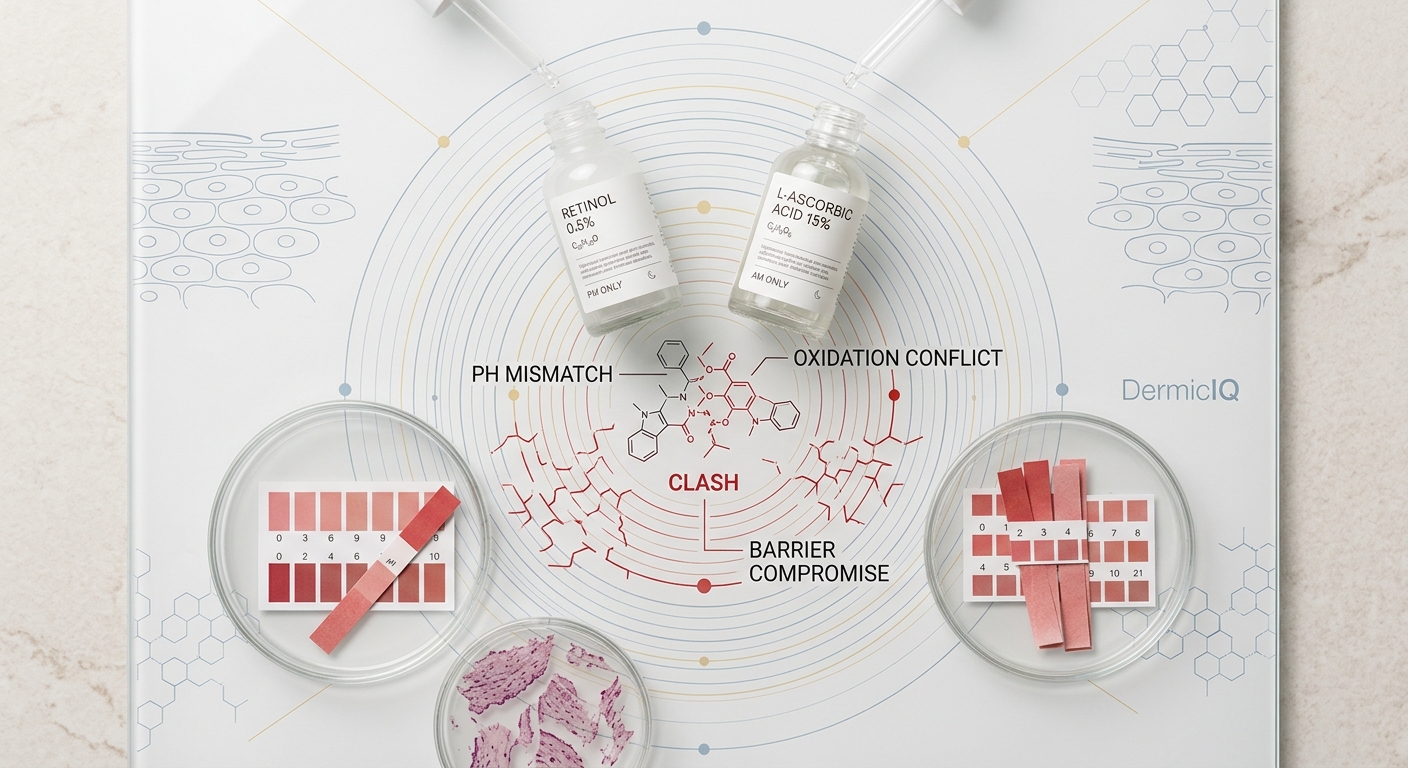
Combining active ingredients has become one of the most popular ways to customize personal care routines. From exfoliants to antioxidants, modern formulas offer unprecedented access to potent compounds.
However, layering multiple active ingredients without understanding their underlying chemical properties can easily backfire. Incompatible combinations often lead to compromised skin barriers, chronic inflammation, or complete neutralization of the active compounds, rendering expensive products useless.
Evaluating active ingredients requires looking beyond trendy "routine rules" to understand pH levels, chemical stability, and physiological impact. Here is a science-backed breakdown of which ingredient combinations to avoid mixing, why they conflict, and how to structure them safely.
The Chemistry of Active Incompatibilities
When two active ingredients conflict, the issue usually boils down to three primary mechanism failures:
pH Mismatch: Certain actives require an acidic environment to penetrate the skin, while others require a neutral environment. Layering them shifts the surface pH, rendering one or both ingredients biologically inactive.
Compounded Irritation: Combining two ingredients that both accelerate cell turnover or exfoliate the stratum corneum overwhelms the moisture barrier, triggering inflammation.
Chemical Oxidation: Exposure to specific compounds destabilizes fragile active molecules, causing them to degrade before they can absorb.
4 Ingredient Combinations to Separate
1. Direct Acids (AHAs/BHAs) + Retinoids
The Actives: Glycolic, Lactic, or Salicylic Acid paired with Retinol, Tretinoin, or Adapalene.
Why They Conflict: Both retinoids and hydroxy acids promote cellular renewal, but through entirely different biological mechanisms. Hydroxy acids loosen the intercellular "glue" holding dead skin cells together, while retinoids stimulate deep cellular turnover. Using them simultaneously creates severe physical stress on the stratum corneum, leading to rapid barrier disruption, peeling, and increased transepidermal water loss (TEWL).
How to Layer Safely: Alternate nights. Use your direct acid 1–2 times per week on non-retinoid evenings, or reserve acids for morning use if your skin tolerates them well.
2. Pure L-Ascorbic Acid (Vitamin C) + Retinoids
The Actives: High-concentration L-Ascorbic Acid paired with Retinol.
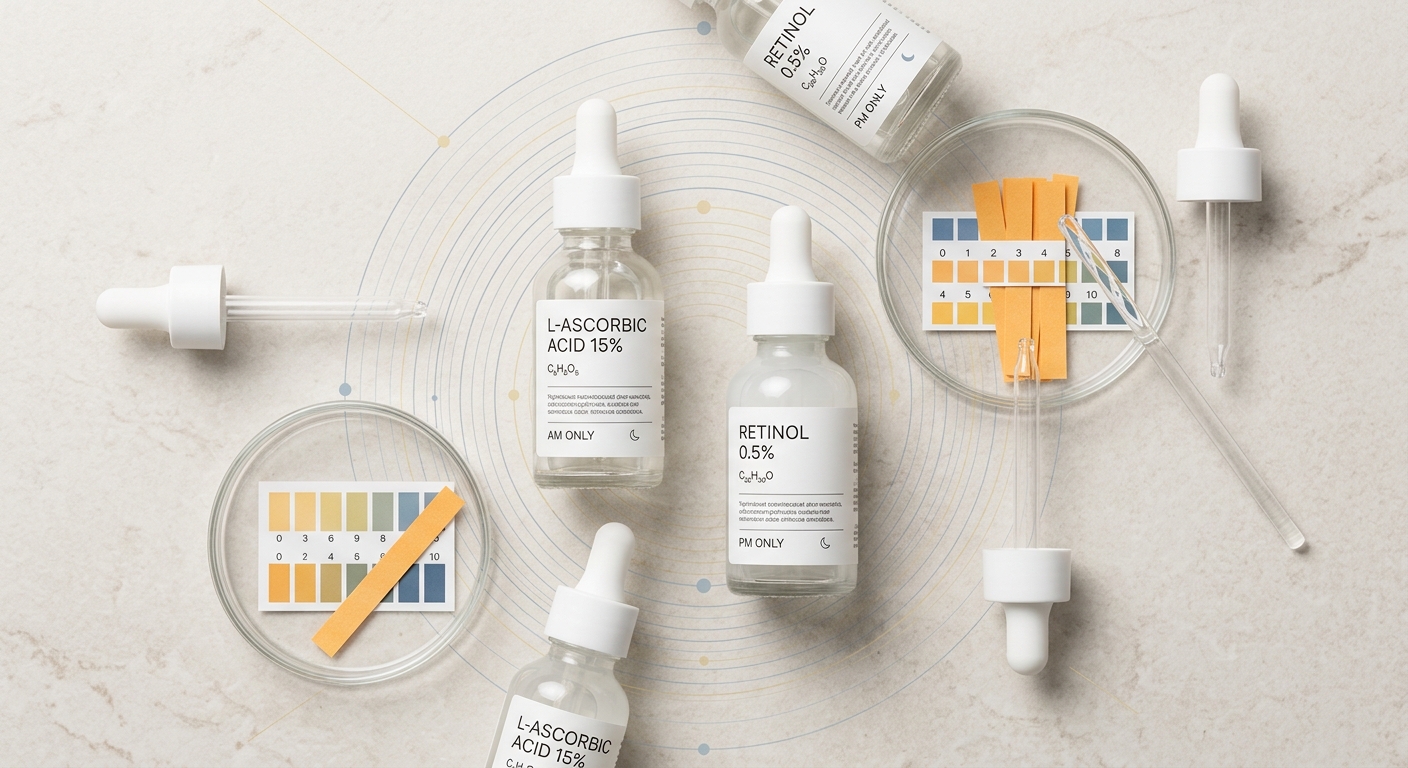
Why They Conflict: Pure Vitamin C (L-Ascorbic Acid) requires a very low, acidic pH (typically below 3.5) to remain stable and penetrate the skin. Retinol, by contrast, functions optimal at a more neutral pH (around 5.5 to 6.0). Applying them together disrupts the optimal pH environment required for both, increasing skin irritation while decreasing the efficacy of both actives.
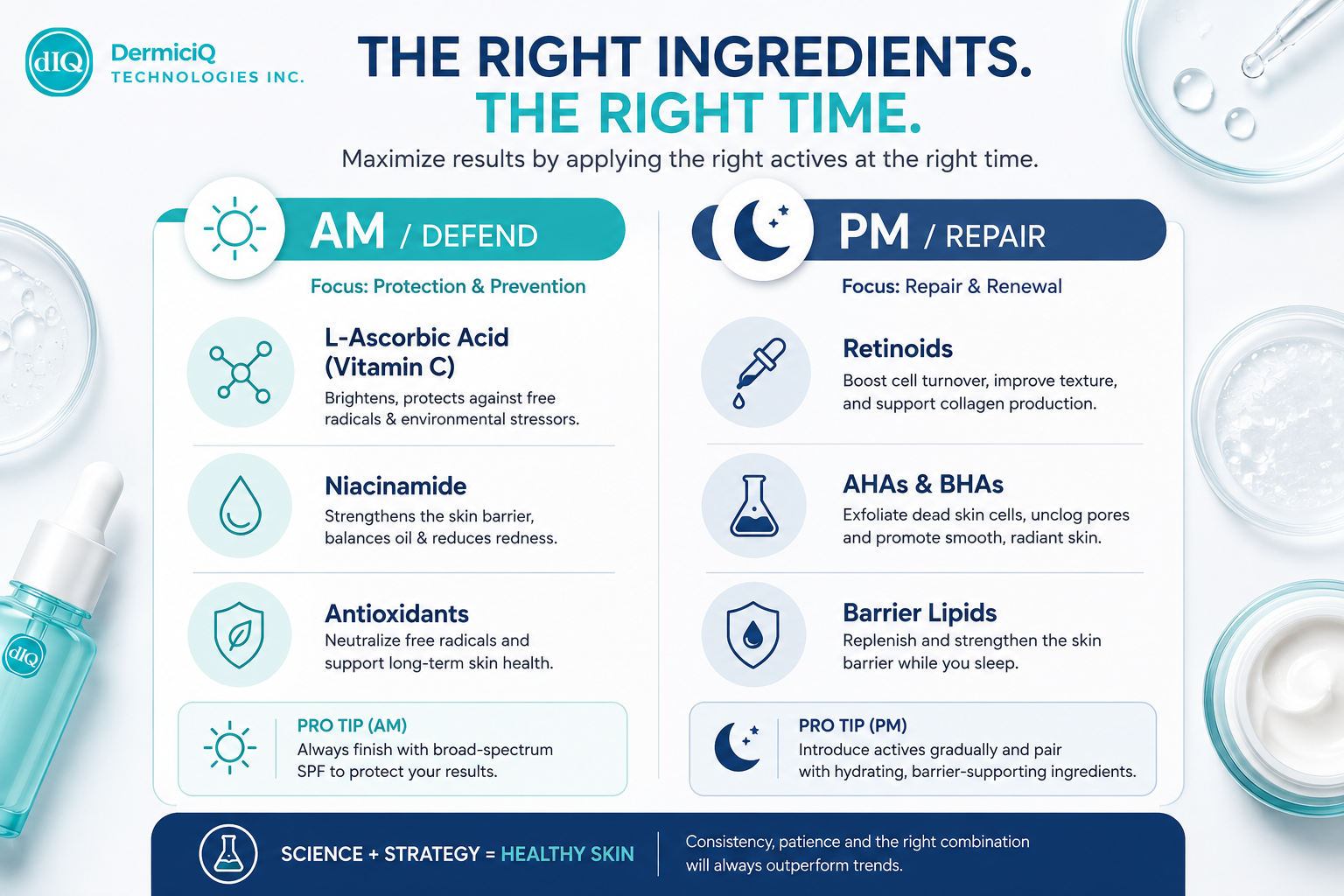
How to Layer Safely: Apply Vitamin C in the morning to leverage its antioxidant defense against UV and environmental stressors. Reserve Retinol strictly for nighttime use, as it degrades in daylight.
3. Benzoyl Peroxide + Retinoids (Standard Formulas)
The Actives: Topical Benzoyl Peroxide paired with Retinol or Tretinoin.
Why They Conflict: Benzoyl Peroxide is a potent oxidizing agent used to target acne-causing bacteria. When mixed directly with traditional retinoid molecules, it oxidizes the retinol structure, causing the retinoid molecule to break down and lose its biological potency. (Note: Newer encapsulated prescription combination formulas like Epiduo are specially engineered to prevent this, but raw retail layering will degrade the formulas).
How to Layer Safely: Use Benzoyl Peroxide cleansers or spot treatments in the morning and apply your retinoid at night.
4. Direct Acids (AHAs/BHAs) + Pure L-Ascorbic Acid
The Actives: Salicylic or Glycolic Acid paired with Vitamin C.
Why They Conflict: While both thrive in low-pH environments, stacking acidic formulas creates an overly aggressive pH drop on the surface of the skin. This rapid acidification strips natural surface lipids, causing immediate stinging and barrier damage.
How to Layer Safely: Use Vitamin C daily in the morning, and use hydroxy acids separately in the evening or on alternate days.
What About Niacinamide and Vitamin C?
There is a widespread myth that Niacinamide (Vitamin B3) and Vitamin C cannot be mixed because they form "niacin," a compound that causes temporary skin flushing.
This reaction only occurs under extreme, high-temperature laboratory conditions when pure L-Ascorbic Acid and unformulated Niacinamide are combined at a very low pH over long periods. In modern, room-temperature cosmetic formulations, Niacinamide and modern Vitamin C derivatives are generally stable, highly compatible, and effective at supporting barrier health together.
3 Rules for Safe Layering
If you choose to use multiple actives in your overall routine, follow these structural guidelines:
Separate by Time of Day (AM vs. PM): Protect by day, repair by night. Place defensive antioxidants like Vitamin C in your morning routine, and reserve restorative, cell-communicating ingredients like Retinoids for the evening.
Apply Thin to Thick: When applying compatible formulas, apply liquid or water-based serums first, followed by heavier gels, creams, and occlusive oils to ensure proper penetration.
Prioritize Barrier Integrity: If your skin feels tight, looks persistently red, or stings during basic cleansing, stop all active ingredients immediately. Focus on basic hydration and lipid restoration until your barrier heals before reintroducing any actives.
How DermicIQ Helps You Avoid Formulation Clashes
Tracking chemical compatibility, pH requirements, and active derivatives across multiple bottles can quickly become confusing.
DermicIQ simplifies routine building by serving as an independent formulation parser:
Cross-Product Conflict Detection: Scan multiple product labels simultaneously to spot active incompatibilities and pH conflicts before you apply them.
Derivative Tracing: Identifies encapsulated or derivative forms of ingredients (such as Sodium Ascorbyl Phosphate or Retinyl Palmitate) that may behave differently than raw parent compounds.
Unbiased Analysis: Operates free from brand sponsorships, affiliate links, or product sales, giving you objective guidance based strictly on cosmetic chemistry.
By understanding how ingredients interact on a molecular level, you can build a streamlined, highly effective routine that protects your skin barrier while delivering real results.
👉 [Download DermicIQ for Free]
Scan your active serums today to check for ingredient incompatibilities and hidden triggers.