
Blog ·
How to Choose Skincare Products: The Science Beyond Traditional "Skin Types"
When shopping for personal care products, most people start with a single metric: their skin type. Labels prominently categorize formulas for "Dry," "Oily," "Combination," or "Normal" skin, offering a straightforward way to narrow down choices on crowded retail shelves.
While this system provides a convenient starting point, relying on broad skin categories often leads to disappointing results—especially for individuals managing skin sensitivity, rosacea, eczema, or contact dermatitis.
Understanding how skin classifications were created, why skin behavior fluctuates, and how to evaluate formulas based on ingredient compatibility can help you make more informed decisions about what you put on your skin.
Where Did the Four "Skin Types" Come From?
The classification of skin into four main categories—dry, oily, combination, and normal—was originally introduced in the early 20th century as a organizational tool for cosmetics counter sales. The system evaluates a single biological factor: surface sebum (oil) production.
However, modern dermatological science recognizes that skin health involves multiple intersecting factors beyond sebum levels alone:
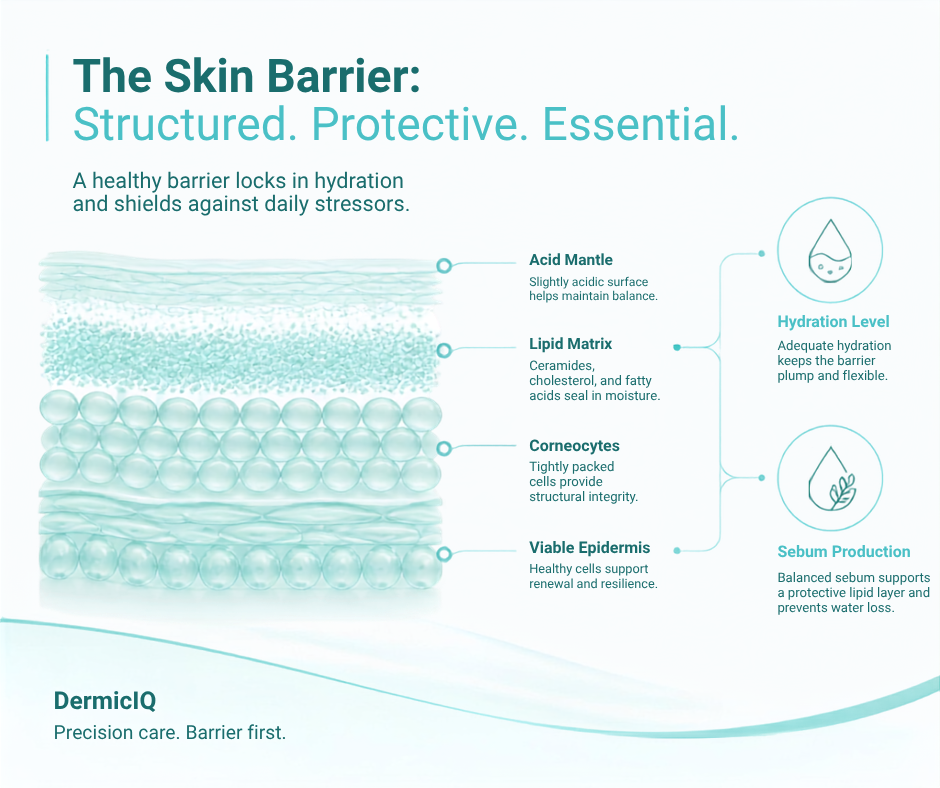
Transepidermal Water Loss (TEWL): The rate at which water evaporates through the skin barrier. High TEWL causes dehydration, regardless of how much oil the skin produces.
Stratum Corneum Integrity: The health of the outermost skin layer, which acts as a physical shield against environmental irritants and pathogens.
Immune Reactivity: How aggressively individual skin immune cells respond to topical substances, which varies significantly from person to person.
Microbiome Diversity: The ecosystem of microorganisms living on the skin surface that helps regulate inflammation and barrier function.
Because skin behavior is regulated by these dynamic systems, treating skin as a static "type" oversimplifies how it actually functions.
Why Broad Categories Fail Reactive Skin
Selecting products based strictly on front-label skin types can introduce unexpected variables into a skincare routine. Here is why broad classifications often fall short:
1. Sebum Levels vs. Barrier Health
A common misconception is that oily skin is inherently resilient or that dry skin simply needs heavier oils. In reality, skin can produce high levels of surface oil while simultaneously suffering from a severely compromised, dehydrated barrier. Applying heavy occlusives or harsh stripping cleansers based on a simple "oily" or "dry" label can aggravate underlying barrier dysfunction.
2. The Ambiguity of "Sensitive" Labels
Unlike active OTC drug ingredients, terms like "for sensitive skin," "gentle," or "hypoallergenic" do not have standardized, universally enforced regulatory definitions. A product marketed for sensitive skin may exclude known irritants like strong synthetic fragrances, but it can still contain botanical extracts, specific preservatives, or emulsifiers that trigger contact sensitivities in certain individuals.
A clinical review in the Journal of the American Academy of Dermatology analyzed popular personal care products marketed for sensitive skin and noted that a significant majority still contained at least one recognized contact allergen from standard patch-testing panels.
3. Fluctuating Skin States
Skin behavior changes continuously in response to environmental humidity, seasonal shifts, stress, hormonal fluctuations, and age. A product that performs well during humid summer months may cause irritation during dry winter conditions, even if your underlying skin chemistry remains the same.
A Better Approach: Evaluating Ingredient Compatibility
Rather than attempting to match your skin to a broad marketing label, a more reliable method is evaluating products based on ingredient-level compatibility. This involves shifting focus from front-of-bottle claims to the raw INCI (International Nomenclature Cosmetic Ingredient) list on the back.
Here are three practical steps for evaluating personal care formulas:
1. Assess Barrier Function First
Before introducing new formulas, determine whether your skin barrier is healthy or impaired. An impaired barrier often manifests as persistent tightness, unexpected redness, or stinging when applying basic hydration. When barrier function is low, the priority should be minimal, low-complexity formulations that support repair rather than active treatments.
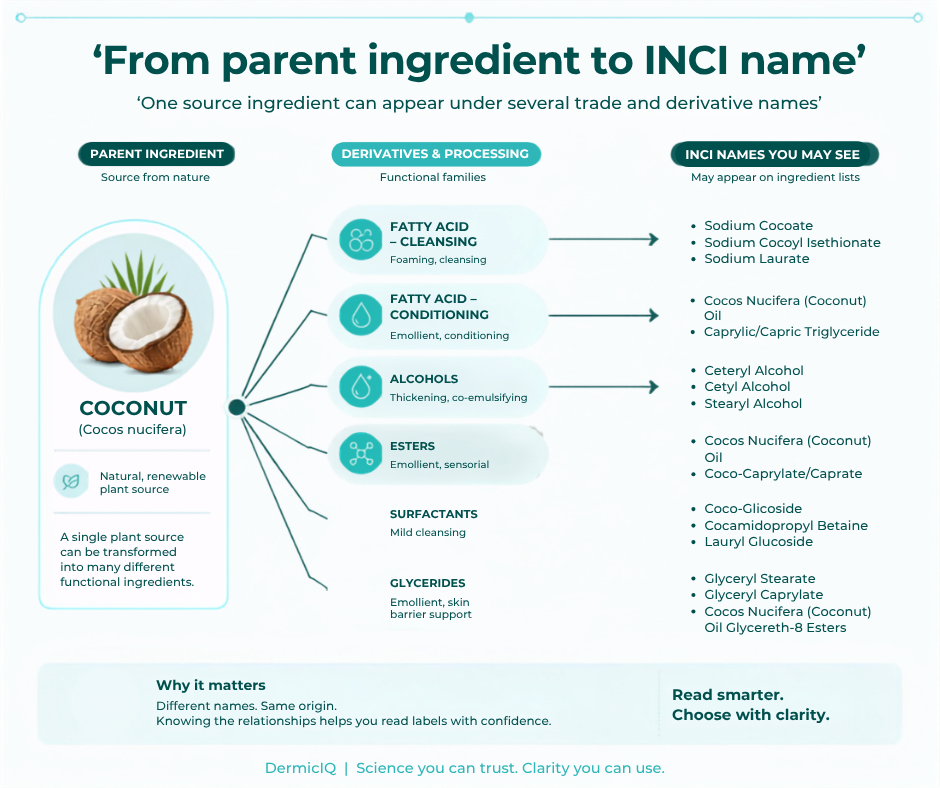
2. Trace Chemical Parentage and Derivatives
Identifying personal triggers requires looking beyond simple ingredient names. Many common cosmetic raw materials—such as surfactants, emulsifiers, and emollients—are derived from shared chemical parents. For example, individuals sensitive to specific coconut-derived compounds may need to look for derivatives that appear under technical names such as Caprylic/Capric Triglyceride, Lauryl Glucoside, or Cocamidopropyl Betaine.
3. Cross-Reference Personal Reaction History
Keep a simple log of formulas that have previously caused discomfort or flare-ups. Comparing the INCI lists of those specific products allows you to identify recurring chemical compounds, preservatives, or botanical families, establishing a personalized baseline for what to avoid.
How DermicIQ Supports Ingredient Transparency
Understanding complex cosmetic formulas shouldn't require a background in chemistry. DermicIQ was developed to provide clear, objective analysis of personal care formulations without relying on arbitrary safety scores or broad skin categories.
Instead of assigning generic "clean" ratings, DermicIQ serves as an independent diagnostic tool:
Derivative Engine: Maps parent-child relationships across 50,000+ chemical aliases to highlight hidden derivatives and potential sensitizers.
Individualized Screening: Cross-references the raw INCI list of scanned products against your documented reaction history and specific trigger profile.
Objective Analysis: Operates independently of brand sponsorships, affiliate marketing programs, or paid certification seals.
By focusing on raw formulation data rather than generalized skin categories, you can select personal care products with greater clarity and precision.
Scan any product label to analyze raw ingredients and check for hidden chemical derivatives.