Blog ·
Going Back to Basics: A Simple Skincare Routine to Repair Your Skin Barrier
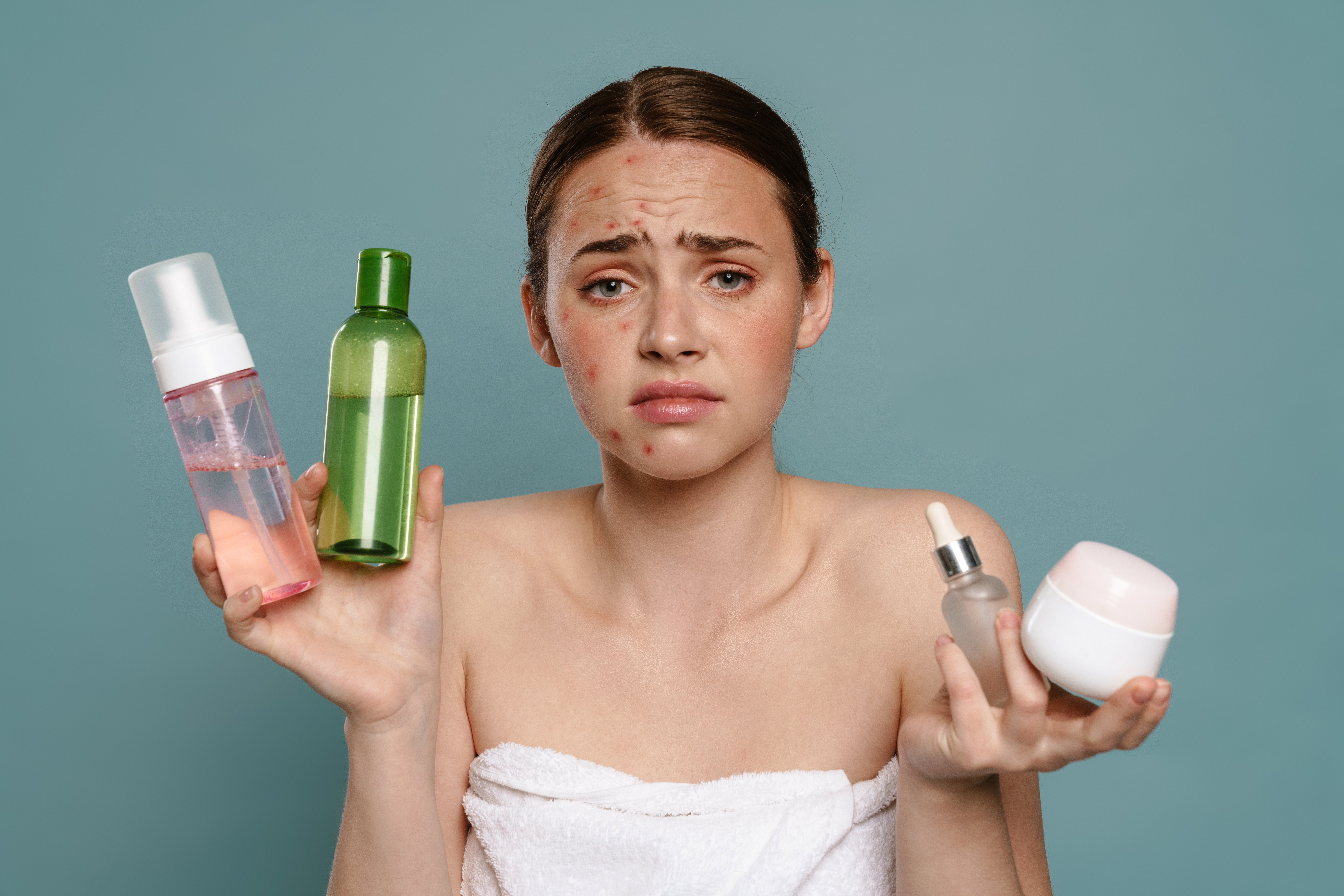
Serums, exfoliants, essences. Morning routine, night routine, Korean 10-step routine. Actives, BHA's, AHA's, Vitamin C, and retinoids. Repairing your skin barrier and achieving that glossy glass-skin look.
These days, there seems to be an unlimited amount of information out there when it comes to skincare and taking care of your skin. Maybe you've tried some, maybe you've been too overwhelmed to even dabble, but no matter what new and exciting product out there you've tried, your skin seems to be stuck. Blemishes, redness, tenderness, and sensitive skin can be frustrating when there never seems to be any solution. If this sounds like you, then it's very likely that your skin barrier has been damaged (what is commonly called "skin barrier damage") and it's been stripped and possibly destroyed. But don't worry, there's a simple way to get your skin back on track with a minimalist skincare routine.
What is the Skin Barrier, and Why Does Skin Barrier Repair Matter?
As you are likely aware, your skin is the body's largest organ and also one of the most intricate. It is made up of 3 major sections called the epidermis, dermis, and hypodermis. The epidermis is the skin's outermost section, which is composed of an additional 4 to 5 layers depending on the location on the body. The stratum corneum sits at the very top of the epidermis and is exposed to the elements which results in producing thin, tough skin cells bound together by lipids, or fats.
This is your skin barrier and it's what protects all the layers of more delicate cells that lie beneath it. Without your skin barrier, all the water crucial for keeping your cells hydrated and healthy evaporates and can leave your skin feeling dry, rough, irritated, and tender. On top of this, those natural lipids holding the stratum corneum together work as a UV shield and when the skin barrier has been damaged, those lipids can become depleted and unstable resulting in solar damage that can be very difficult to undo.
So What Now? How to Start a Skin Barrier Repair Routine
So you've discovered your skin issues could be a damaged skin barrier, but what now? Do you search for any product that claims to repair it? What if you could heal without having to spend more money?
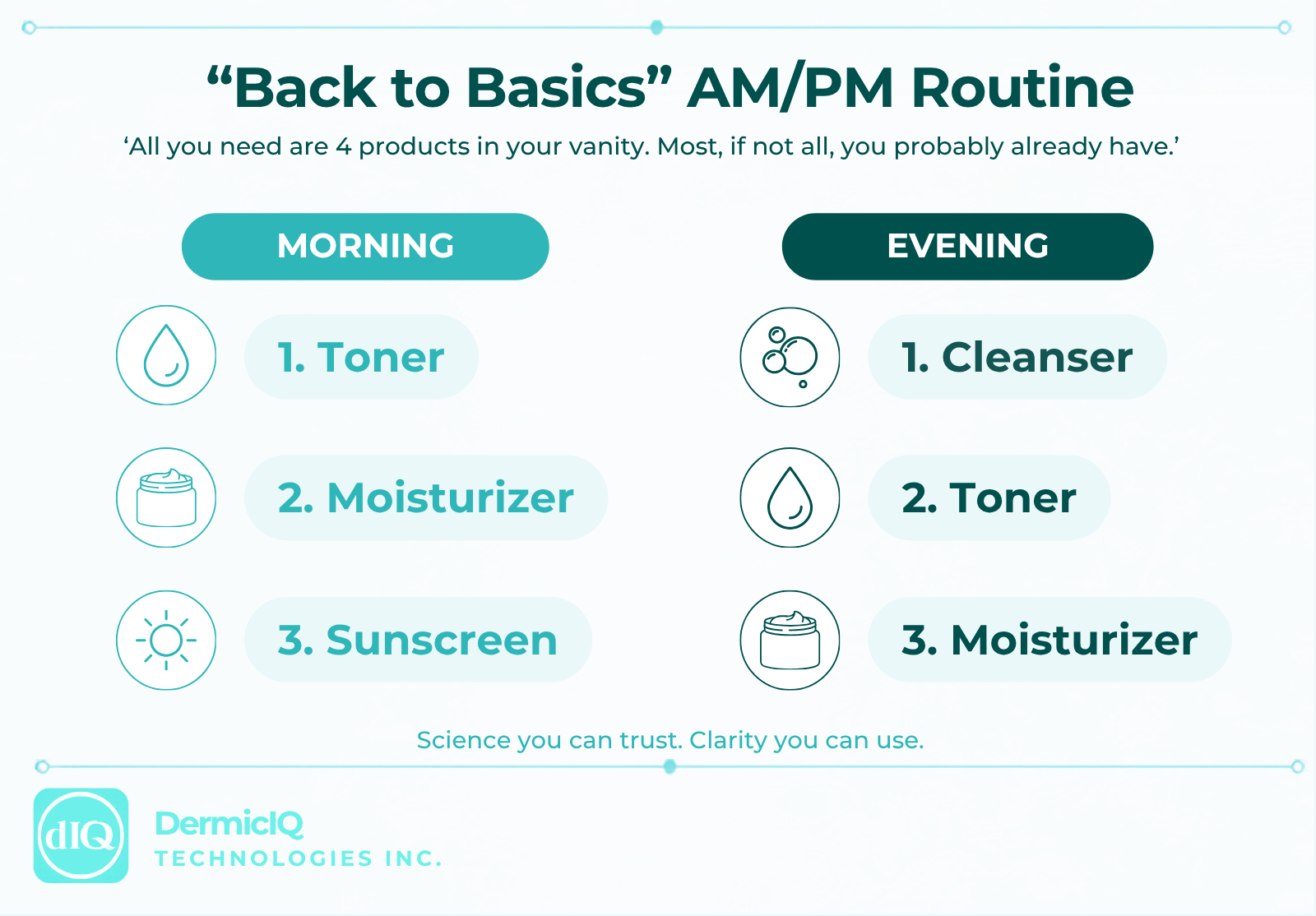
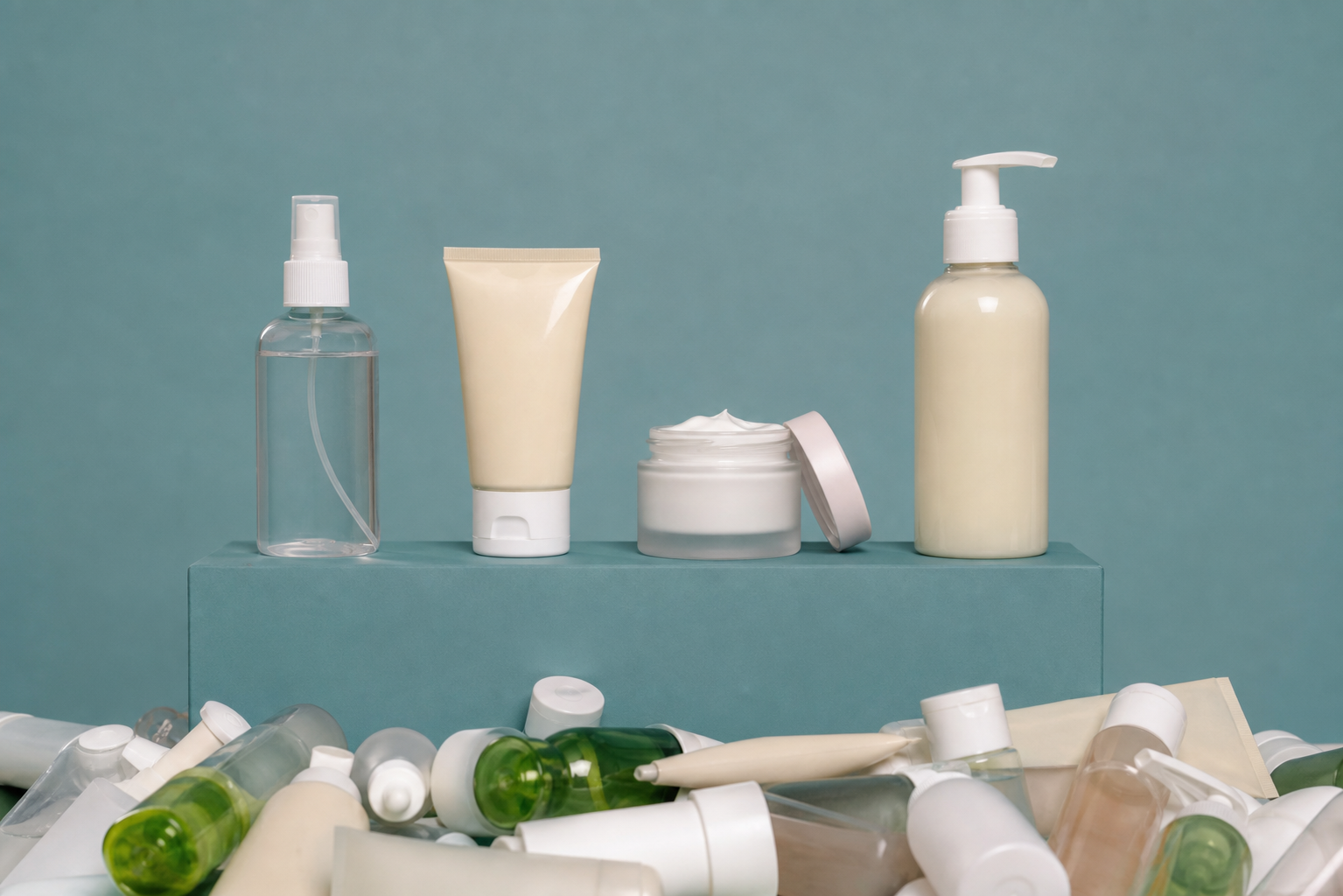
When your skin has reached a point where nothing seems to be helping no matter what you buy, it's time to go back to basics. You don't need 10 steps or even 5 to bring back healthy and radiant skin. All you need are the 4 essential products in your vanity, the foundation of any effective skincare routine. Most, if not all, you probably already have.
Cleanser: Step 1 of Your Skincare Routine
Through the day, we pick up so much on our skin whether it be a build-up of our own sebum or pollutants that stick to it. That's why a good, gentle cleanser is so important to have and yes, just one cleanser.
Double cleansing, which is when you use an oil-based cleanser followed by a foaming or gel cleanser, is only necessary if you are wearing makeup regularly. Although, if you are struggling to regulate your skin it would be for the best to hold off on the complexion makeup (foundation, concealer, blush, contour, etc.) until you've achieved some stability. Wearing complexion makeup regularly doesn't just clog your pores, but double cleansing can also be stripping on a compromised skin barrier.
So which one do you choose? Oil cleansers are best for removing makeup, sunscreen, and excessive oil, but foaming cleansers clear out dirt and impurities from pores. A good gel cleanser can be the best of both worlds as long as makeup isn't applied too heavily or utilizes stubborn, waterproof formulations.
Helpful tips: Did you also know that recommending cleansing both morning and night is actually a marketing tactic to force you to run through your product faster? Save your money, cleansing is only necessary at the end of your day. If you wash your pillowcase every week and go to bed with a clean face, how is it going to collect dirt and grime as you sleep?
Toner: Step 2 for Balancing Skin pH
So, what does a toner actually do? It's recommended in every kind of skincare routine, but what for? It seems like basically water, right?
While cleansers are necessary, they can actually disrupt your skin's natural pH levels. A normal pH level for healthy skin can be anywhere from 4.7 to 5.75, but cleansers tend to run more alkaline at around 6.5. Toners are formulated as a follow-up to cleansers to help return your skin's pH balance back to where it's supposed to be.
"But my cleanser says it matches the skin's pH level." That may be possible, but the truth is cosmetic companies are not obligated to disclose the pH of their products. They may claim that their cleanser doesn't disrupt your pH levels, but there's no way to know for sure. With compromised skin, it's best not to take risks.
How can you tell if you're using a good toner? A toner packed full of skin-thirsty ingredients will have a slightly thicker consistency than water and a somewhat slippery texture. When applying it onto a cotton round, the solution should briefly create a small dome before absorbing. And since you don't need to use a cleanser in your AM routine, swiping toner on a cotton round across your face in the morning is a great way to remove any excess oil or sweat from the night before while leaving you feeling refreshed.
Helpful tips: If you're craving a sheet mask, but can't swing it this month, soak several cotton rounds in toner and press them to your face for a similar effect. You can leave the cotton rounds for as long as you would leave a sheet mask (8-13 minutes), but be sure to use our app to check if your toner is alcohol-free before trying.
Moisturizer: Step 3 for Hydration and Skin Repair
A good moisturizer is the best way to regulate skin. Not only do moisturizers provide conditioning to help with hydration and repair, but they're often formulated with additional benefits from aiding inflammation to helping reduce uneven pigmentation. Since your moisturizer sits on your skin without being washed off, it's the best way to aid other problem points you've been having while still keeping your routine minimal. Moisturizer is a nonnegotiable if you want to help repair and maintain your skin barrier, so be sure to be applying it twice a day even if you suffer from oily skin, dry skin, or combination skin.
Helpful tips: With clean hands, press the length of your pointer finger into the meat of your cheek, right about where your upper jaw sits. While applying pressure, gently lift your finger up towards your eye. If the skin above your finger creates fine creases and appears thin and papery, you're lacking hydration and need to be more regular applying moisturizer twice a day. This could also mean you have been applying the incorrect moisturizer.
Sunscreen/SPF: Step 4 and the Most Important Anti-Aging Product
If you take anything away from reading, let it be this: you must always apply sunscreen and SPF protection everyday. If you only have time to apply one thing, choose sunscreen.
While there are certain guidelines around sunscreen that you should ideally follow, any sunscreen is better than no sunscreen. Especially if anti-aging is something that is important to you, you are just undoing any investment you put in if your SPF isn't in check.
There are two different kinds of sunscreens and they both have pros and cons: mineral sunscreen and chemical sunscreen.
Mineral sunscreen will provide superior protection as it sits atop of the skin and bounces UV rays off before they have a chance to affect your cells. It provides immediate protection without any absorption period necessary before sun exposure. If you have had trouble with sunscreen breaking you out or causing irritation, a chemical sunscreen is less likely to trigger the skin. Also, if you enjoy spending time in lakes or oceans, chemical sunscreen is believed to be safer for marine life. However, it often has a thicker texture that can take more time to absorb and can leave a white cast which may not be ideal for those with deeper skin tones. You will know if you're using a mineral sunscreen if it contains the ingredients zinc oxide and/or titanium dioxide.
These days, it's more common to find chemical sunscreens on the shelves, or a mix between the two. Chemical sunscreens have a wider variety of ingredients that they may be composed of and blend seamlessly into the skin. Chemical sunscreens also tend to have more skincare ingredients which can help with hydration and help counter irritation. While chemical sunscreens don't have much evidence to support being less effective than mineral sunscreens, it is important to note that they absorb into the skin instead of sitting on top. While this can make them feel more comfortable for users who want to avoid feeling oily or greasy, this means UV rays penetrate the skin before they are reflected. Due to the need for absorption, you must also avoid sun exposure for at least 20 minutes after application.
Helpful tip: Your sunscreen should be at minimum 30 SPF, but the higher the better. While some makeup and moisturizers include SPF, you will get better protection if you use an additional, dedicated sunscreen. Additionally, if you prefer a mineral sunscreen but hate how long it takes to absorb, try gently patting your skin instead of rubbing. If you've never tried, you'll be surprised how much faster the white cast blends in versus rubbing.
Building Your Skincare Routine for Long-Term Skin Health
For everyone who uses skincare, there's always some goal they are trying to achieve. While going back to basics may seem like working backwards towards that goal instead of forward, it's not possible to achieve your radiant, clear, even, or firm ideal without building a strong foundation first. How long someone needs to stick to basics will vary depending on their current skin condition, but it typically takes at minimum 3 months before you can see the full effects of any product, including introducing your skin to a new routine. But remember before introducing any new products, always introduce one new thing at a time and wait 3 to 5 days to determine if it agrees with your skin. Only then, you can try introducing something else.
Still not sure if your basics routine is working for you or towards your skin goals, or which skincare products are right for your skin type? Download DermicIQ skincare app today for free in order to get a clear understanding of your products' formulations. We use simple and straight forward language so that healthy skin can be accessible to everyone. We don't push any particular brands nor inflate the effectiveness of any product, just straight facts. If we don't have your products listed or if you have any inquiries, please do not hesitate to shoot us an email through our Contact page. You will always get a reply from a human, never a robot.